Protecting the vote through education, engagement, and action.
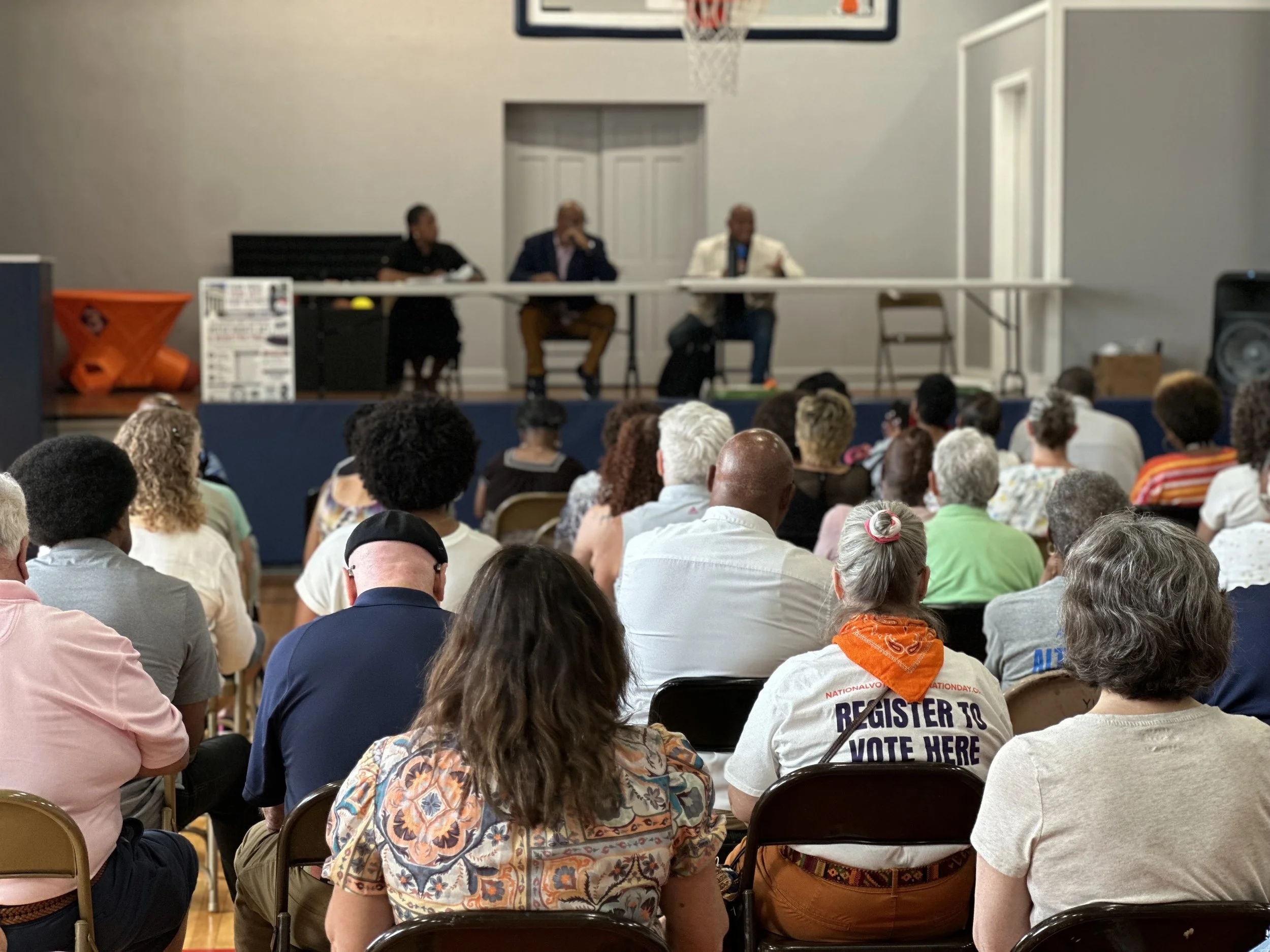
On Saturday, July 18, Carolyn Caruthers hosted a Community Town Hall at the Alton YWCA to educate the community on voter rights and the current news around redistricting. There have been multiple news stories about the Supreme Court’s April 2026 ruling on Louisiana’s congressional map, but a lot of other states may feel this case was irrelevant to them.
It is not.
The town hall began with a prayer from Rev. Darrell McCrady of Morning Star Missionary Baptist Church. There was also a tribute to Medgar Evers.
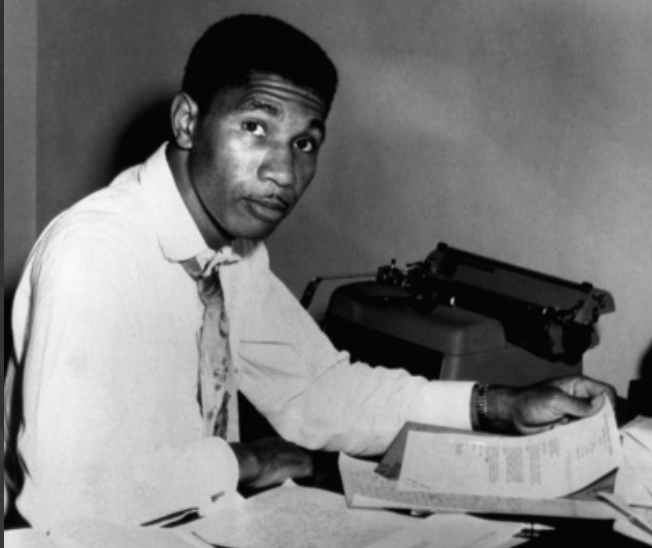
Medgar Evers in Jackson, Mississippi in 1963, crmvet.org
According to NAACP’s website, Medgar Evers heroically spoke out against racism in the deeply divided South. He fought against cruel Jim Crow laws, protested segregation in education, and launched an investigation into the Emmett Till lynching. In addition to playing a role in the civil rights movement, he served as the NAACP's first field officer in Mississippi.
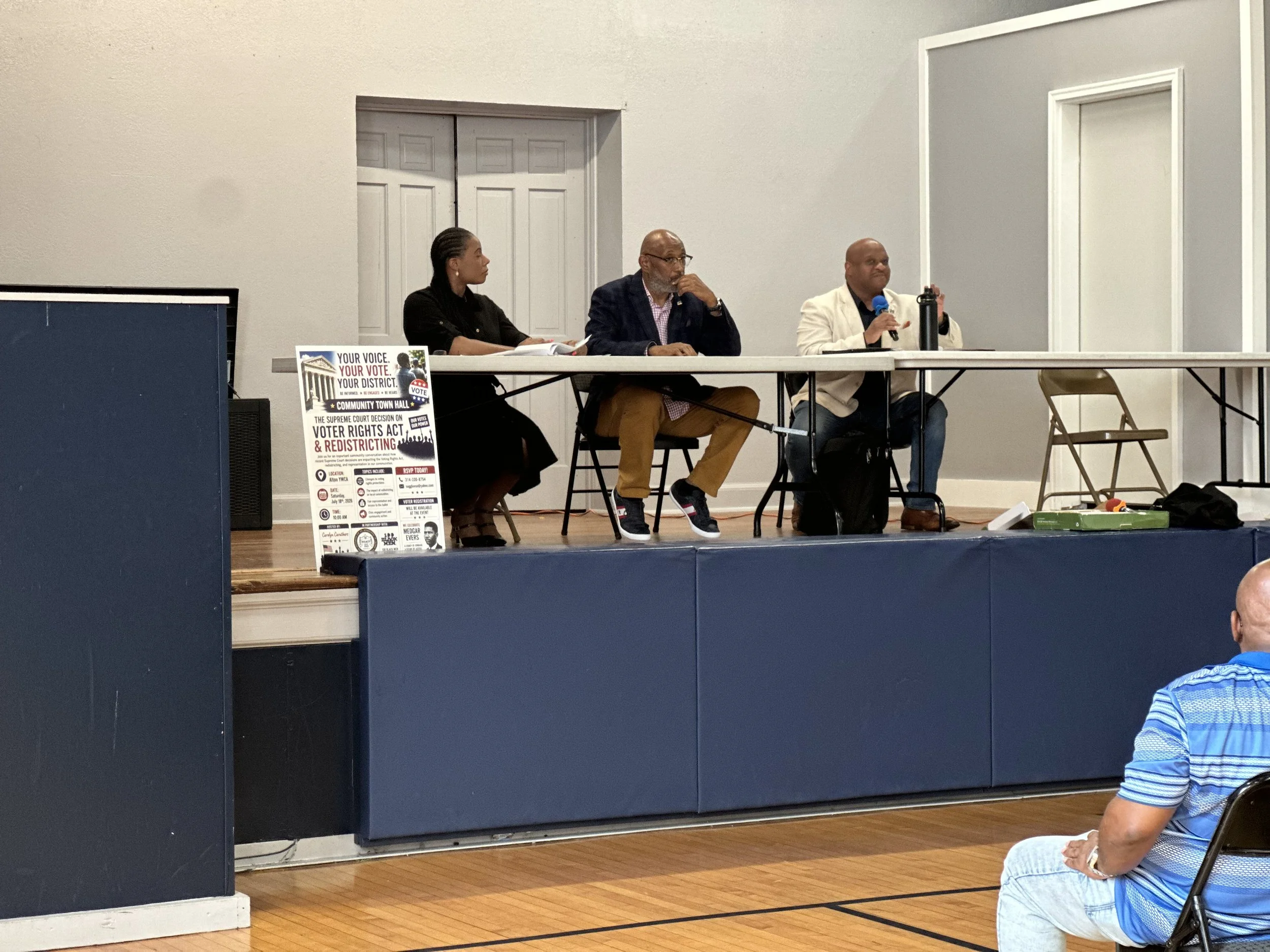
(Left to right) Ebony Huddleston, Rouzell Porter, Rev. Charles Burton. (Former Judge Duane Bailey not pictured.)
Caruthers hosted a panel of 4 community leaders:
Attorney Ebony Huddleston
Rouzell Porter, 100 Black Men
Rev. Charles Burton, UCM Board Treasurer
Former Judge Duane Bailey
The discussion focused on educating on the importance of civic engagement- not just around elections, but all year. It was a conversational forum that defined terms such as gerrymandering, (other terms) and provided practical ways for community members to do their part.
Ebony provided background on how the 15th Amendment was the precursor for the Voting Rights Act of 1965. Although the 15th Amendment prohibited the government from denying anyone the right to vote based on race, stipulations were put in place to deter Black Americans from voting. Poll taxes, literacy tests, and grandfather clauses were popular in states to keep voting numbers down. All of these tactics are evidence of how important and powerful voting can be.
Some community forums focus on the how and not the why. The panel did a phenomenal job of bringing these issues to our doorsteps, encouraging accountability for not only those we vote in office, but those who are voting.
“God measures us by how we treat the ‘least of these’...and right now the least of these is most of us.”
When people say that their vote doesn’t count, we have to remind them of what is at stake. Make it personal.
Porter, Assistant Director at Lewis and Clark Community College, brought an educational perspective with the risk associated with TRIO Programs. Federal TRIO Programs, like Upward Bound and Talent Search, are services funded by the US Department of Education to help low-income, first generation college students and individuals with disabilities.
As a former TRIO program student, the thought that this current administration wants to decrease the number of national programs from 518 to only 175 truly broke my heart. I would not have been able to visit all 5 universities I applied for had it not been for Upward Bound. This was one of the many benefits I received as a first-generation college bound student that may not have happened otherwise.
Voting isn’t our only duty. Civic engagement looks like having tough conversations with our neighbors, volunteering to work the polls to make sure no one gets turned away, engaging with those who are currently in office to hold them accountable to their platforms, etc. The vote is truly only the beginning.
“The checks and balance is now back in our laps.”
Other UCM members were also in attendance at the town hall. Larry, our Board President, was excited about the turnout and the conversation:
Carolyn Caruthers, in partnership with the Alton branch of 100 Black MEN and the Alton Branch of the NAACP held an open community discussion at the Alton YWCA addressing the recent Supreme Court decisions affecting the Voting Rights Act and redistricting. I was in the queue to speak but the time ran out before I was able to, so I'll take this opportunity to give a political challenge to whoever reads this. Education, knowing your rights, voting, and knowing your districts are essential but not sufficient. I'm challenging every stakeholder to "occupy" their district by becoming an Election Judge in the County in which you reside.
Madison County is desperate for Election Judges. If every stakeholder group or church would get three people to sign up to be an election judge we could occupy the institution that arranges for and counts our votes. You could also become a Deputy Registrar and be able to register people to vote.
Stoic philosophers have a saying, "resistance determines direction". My challenge to you is to go directly at what vexes you in a way you can be most effective. The direct action of becoming an election judge will provide the education you need about the systems that implement and govern local elections. Also, you will be able to develop relationships with the people who are in those offices. This challenge seems to me to be a low-hanging-fruit entry point to make the Town Hall Discussion more than just a conversation. You will have to get up and "do something" over a sustained time period.
At the back of the dark cave is the thing you desire. Take the journey!
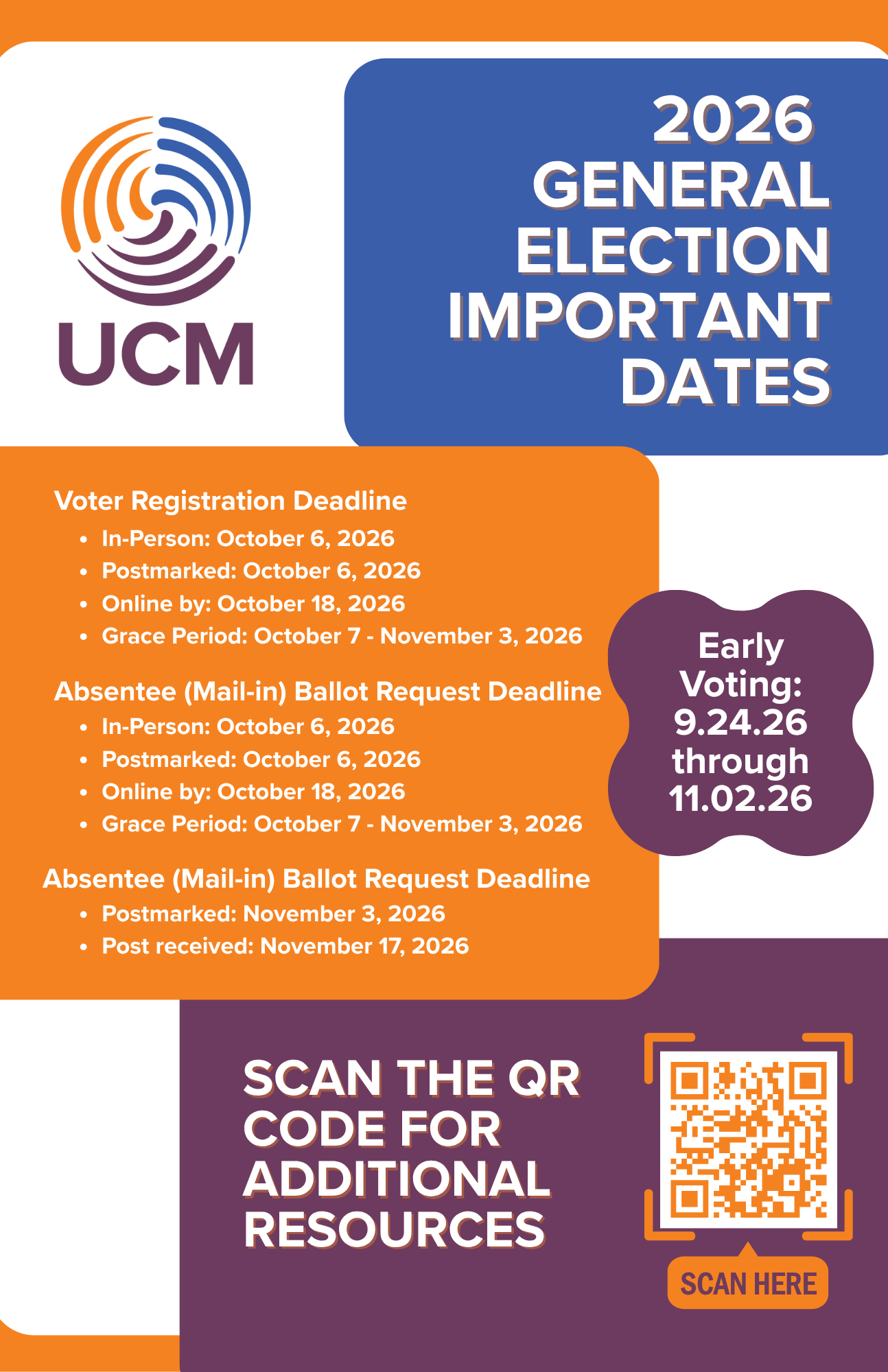
It is never too early or too late to prepare for the next election. Be sure to know the important dates below for the Illinois General Election coming this November.